| |

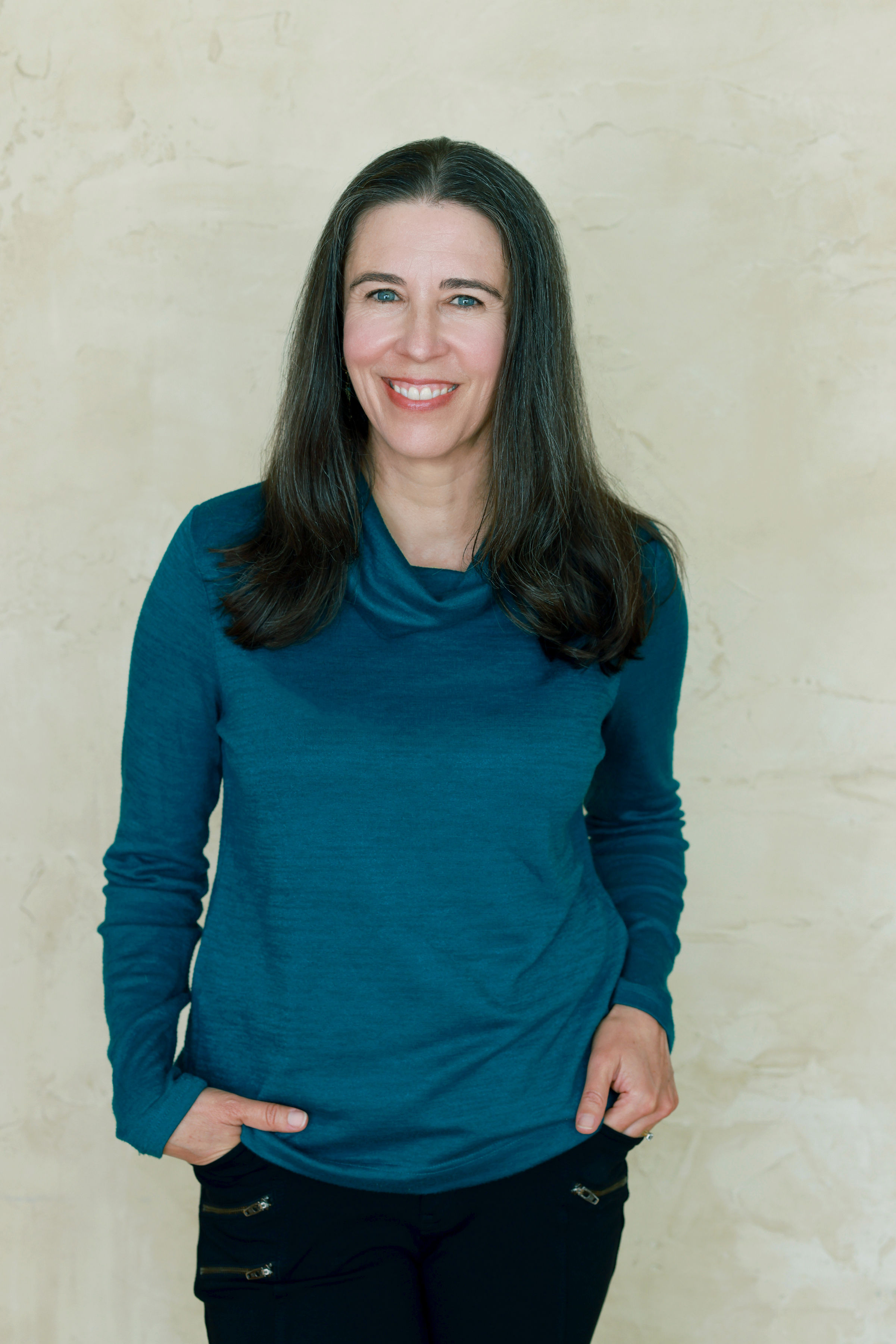
When it comes to categories, Laura Love defies them all. For a while she
referred to her sound as 'funkabilly.' Then when her critically
acclaimed release, Octoroon, came out last year, the label
'Afro-Celtic' was given to her by an astute critic, and it stuck like crazy
glue. "It doesn't quite fit anymore, it's not quite enough, is it?" Laura
laughs, "If you can think of something better, go for it!" Quite a task,
considering how many musical influences are liberally sprinkled throughout
Laura's latest release, Shum Ticky.
Laura Love gives the term 'world music' an entirely new meaning. "I didn't
set out to be unique," she insists. "I think I was defined by my limitations.
I didn't have the attention span to sit there and get every nuance of jazz,
blues, swing, bluegrass, or Celtic music. I would have to strive forever to copy it, and
I would be just that -- a copy. I'm an amalgam of all these things -- I've got African
blood, European blood, Indian blood, and it all comes out in the music. My body
seems to have a memory for things I haven't quite experienced. And I have a lot of
curiosity about it -- what slave owner raped what slave, what slave mixed with which
Indian to get me here. I guess I'll never know, but I get glimpses of it that show up in
my music."
A Lincoln, Nebraska native, Laura began her wildly diverse musical career at the age
of sixteen, playing her first gig at the Nebraska State Penitentiary. Beginning with pop
standards, moving into grunge-blues with the controversial Seattle band, Boom Boom
G.I., and on to solo recordings, festivals and headlining shows, Laura eventually
released three albums on her own label, Octoroon Biography. Putumayo World Music
has included Laura's music on two compilations, as well as releasing the Laura Love
Collection, while Laura's electric live performances have entranced critics around the
globe.
"I started writing my own songs because I was criticized for doing other people's
sexist, misogynist music. I had to get a dictionary, looked up the words, and said 'You
know, they're right!' I went to school and got an education about these things --
women's studies, race relations, civil rights classes. I learned about the far-reaching
effects of it all, and that's what I wanted to write about." Laura picked up the bass at
age 25. "I wanted to play those subliminal notes," she says with a knowing smile, "On
the bass you're not cluttered up with all those chords; you're usually just coming up
with the root. I get a groove. A simple groove, but it's an anchor. Once I get a body
memory for the groove, once every part of me gets it, then I'm free to start humming
over the top of it. I let the song kind of lead, and the last thing that comes into play are
the ideas of what the song is about."
The infectious, lyrical, universally-themed songs on Shum Ticky traverse the
whole of Mother Earth. Along with 12 original Laura Love compositions, the album
features a jazzy cover of "The Clapping Song" with a guest rap by Sir Mix-A-Lot.
"Mahbootay," an absurdly catchy African chant, is actually a tribute to a
certain lovely part of Laura's anatomy. "I just don't hang out with people
who don't like my butt!" Laura exclaims, "You know, it's a universal theme!
The bottom line! I get so sick of opening magazines and seeing those spidery,
junkie-looking women that are like 'I'm so hungry I could eat my own
fingers!' Go get a burger, girl! More power to women who actually look like
that, but they gotta have something to sit down on, don't they?"
Shum Ticky blends nursery rhymes with rap and scat which somehow combines
perfectly with yodeling. "My mission in life is to put the 'yo!' back in yodeling," Laura
declares, "Anyway, can't we all just get along? You know, ebony and ivory? It feels
really good to put a Middle Eastern melody with an Afro-pop groove, it seems like
they flow together naturally, and the bottom line is that we are supposed to get along,
influence each other, absorb each other's culture. It's a dynamic thing."
The bottom line for Laura Love is honesty and pure self-expression. "Once you get
over yourself, it really frees you up," she grins. "Writer's block is being afraid to
make a mistake, to be criticized for being juvenile or not being profound. I've lived
my whole life being juvenile and not being profound," she laughs wickedly, "and I
feel pretty good! If we could just live our lives the way we make love. Just so it feels
good, and not 'Oh God, how do I look in this position? Oh no, this isn't my best light!'
Nothing is better than an uncool moment in a slick situation. Most of my life I've
strived for uncool moments."
Obviously Laura Love gives new meaning to 'uncool.'
"Laura Love, one of the most significant and exciting artists to emerge from the
Northwest music scene in recent memory, has been performing with her band regionally
since 1990 and nationally since 1992. In the past several years she has been an
overwhelming hit at music festivals, concerts and clubs across North America,
successfully wedding African/Caribbean rhythms, traditional acoustic instruments
and intriguing harmonies into a style that she calls "Afro/Celtic."
"Born in Lincoln, Nebraska, Laura began her professional career at the age of 16, singing
pop and jazz standards. Her first gig took place at Nebraska State Penitentiary. She soon
moved on to club and college dates, developing her distinctive vocal and
bass styles over the years."
"A multi-talented artist, Laura has performed nearly every style of
popular music. Having settled in Seattle, she took up with grunge-blues outfit,
Boom Boom G.I., in the late '80s. The band was alternately hailed as
the best rock band in the city and reviled as the worst. Her life took
a significant turn when a local music publication slammed her for
wasting considerable talent in an "annoyingly pointless" band. Laura,
stung by the criticism, examined her priorities and began writing her
own music. The result is a weave of ethnic and American roots influenced rock
underscored by powerful rhythm and executed with astonishing harmonic vocals."
"Laura's performance is exciting, uplifting and joyful and her effect on
an audience is extreme. She tours as a quartet with electric bass, acoustic guitars,
percussion, tongue drum and accordion."
| |